Icarus Memoir

Diaries and Perspectives of a Work-in-Progress Truth-Seeker

Category: Uncategorized

  • Chapter 13: Between the Sea and the Sun

    Chapter 13: Between the Sea and the Sun

    The true measure of a man is the oath he keeps when the heavens tempt him.

    Read on Substack

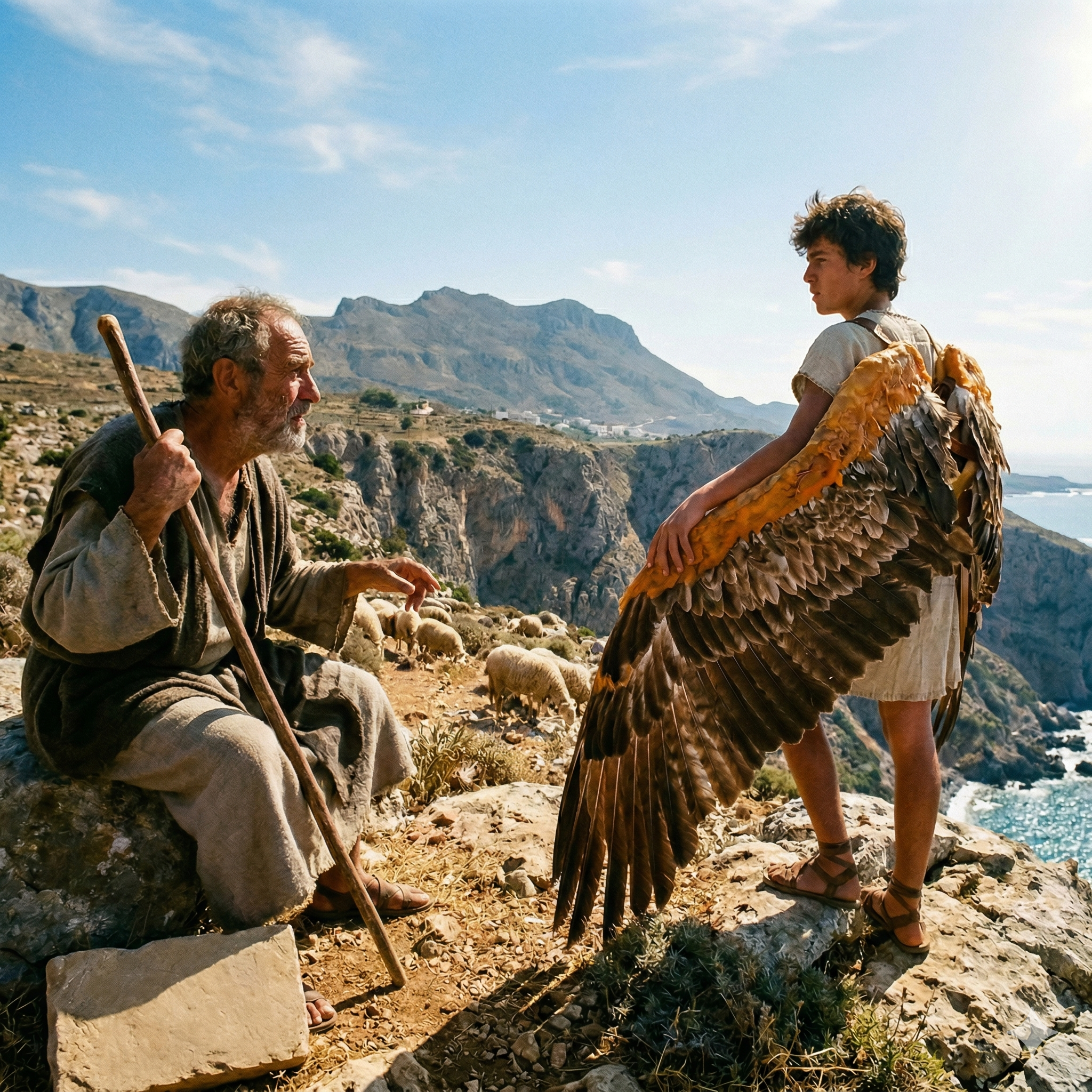
    The Mediterranean sun beat down on the rocky cliffs of Crete. Icarus stood near the precipice, the coastal wind pulling at his tunic. Beside him rested his father’s magnificent creation, wings of eagle feathers bound by golden wax. But Icarus wasn’t looking at the wings; his eyes were fixed on the horizon, his chest puffed with pride.

    An old shepherd, his face deeply lined by decades of wind and salt, leaned heavily on his wooden staff. He watched the boy’s arrogant posture.

    “I am ready,” Icarus declared to the wind, glancing back at the old man. “My father chose me for this flight because my spirit is unyielding. I possess a fearless heart and a sharp mind. Is that not the absolute pinnacle of human quality?”

    The shepherd stepped closer, the bells of his grazing flock ringing softly in the background. “You have a bold spirit, boy. But boldness and true character are not always the same breath of wind.”

    Icarus frowned, deeply offended. “You tend sheep, old man. What do you know of great men? I am the son of Daedalus, the greatest inventor of our age. I have endured the darkness of the labyrinth. I face the infinite, terrifying sky without a single tremble of fear. My character is flawless.”

    “I know the earth, and I know the sky,” the shepherd replied gently, lowering himself onto a warm, sun-baked stone. “And I know that a hound who barks fiercely is useless if he abandons the flock the moment the wolf arrives. Tell me, what have you promised your father regarding this flight?”

    “To fly,” Icarus answered quickly, his eyes gleaming. “To soar above the tyranny of King Minos and claim our freedom.”

    “And how must you fly?” the shepherd pressed, his weathered eyes narrowing. 

    Icarus hesitated, the bravado slipping for a fraction of a second. “I gave him my word that I would fly the middle path. Not too low, lest the heavy sea spray drag me down. Not too high, lest the sun’s heat destroy the wax. I swore an oath to follow his exact course.”

    The shepherd nodded slowly. “A solemn oath. But the sky is an intoxicating master. When the wind catches you, when the euphoria of the heavens takes your mind and the earth looks insignificant beneath your feet, will you remember your word? Or will your fearless heart demand more glory than you promised to take?”

    Icarus stood taller, his jaw set defensively. “I am a man of exceptional quality. I will not fail my father.”

    The old man reached out, his calloused fingers pointing not to the marvelous wings on the grass, but to the center of Icarus’s chest. He looked directly into the boy’s defiant, tragic eyes.

    “Quality of character is not your lack of fear, Icarus. It is not your noble bearing, nor the brilliance of your mind.” The shepherd leaned back, resting his hands heavily on his staff. “Quality is keeping promises.

    Icarus fell silent, the profound weight of the words sinking past his youthful pride.

    “If you promised your father the middle path, your character is only as strong as your devotion to that path,” the shepherd continued, his voice dropping to a gravelly whisper. “If you fly into the sun because your ambition deafens you to his warnings, you have broken your promise. The true measure of your worth as a man is not how fiercely you crave the heights, but whether you have the discipline to keep your word when the heavens tempt you to break it.

    Icarus looked up at the blazing, golden sun, and then down at his own hands. For the first time, the endless sky seemed vastly more dangerous than the labyrinth he was leaving behind.

    [Read from the beginning: Chapter 1: The Wax and the Wire]

  • Chapter 12: People to Hide Me

    Chapter 12: People to Hide Me

    Fame gives you wings, but only love gives you a safe place to land.

    Read on Substack

    The penthouse office of Daedalus Aerospace sat eighty stories above the sprawling city, a palace of glass and steel that seemed to touch the sky. Icarus stood by the floor-to-ceiling window, staring out into the blinding afternoon sun. He was thirty-two, dressed in a sharp, bespoke suit, vibrating with the restless energy of a young man desperate to take flight.

    Behind him, his father sat at a heavy oak desk, meticulously reviewing a complex blueprint. Daedalus had built an empire from nothing, crafting marvels of modern engineering that had elevated their family name to the stratosphere.

    “I don’t get you, Dad,” Icarus said, not turning away from the glare of the sun. “You’ve built all this. You gave us wings. But you just sit here, working quietly. What are you actually trying to achieve in life at this point? Is it a net worth of a hundred billion? Is it fame? Is it women? Because you could have all of it. You could be the king of the world, but you act like none of it matters.”

    Daedalus set his pen down. He looked at his son’s silhouette, haloed by the harsh, unforgiving light.

    “Wealth, fame, women,” Daedalus repeated softly, the words sounding hollow in the vast office. “Wax and feathers, Icarus. They melt the second things get too hot.”

    Icarus scoffed, finally turning around. “So what’s the great endgame, then?”

    Daedalus leaned forward, resting his calloused hands on the desk. “All I want to achieve is that when I reach the very end of my life, I have more people willing to hide me.”

    Icarus frowned, his brow furrowing in genuine confusion. “Hide you? Hide you from what? The tax office? The paparazzi? What are you talking about?”

    “No,” Daedalus said, his tone turning grave. “Think back to history. Think of the Second World War. When the Nazis were hunting down Jewish families across Europe, those terrified people had to knock on doors. They had to look for individuals who would risk their own lives, and the lives of their own children, to hide them in their attics and basements. That kind of salvation couldn’t be bought with a bank account, and it certainly wasn’t earned through fame.”

    Daedalus stood up and walked over to his son, placing a firm, grounding hand on his shoulder. “If the world turns dark, Icarus, and a mob comes marching to our door, all the money in our offshore accounts won’t stop them. The people who flock to your wealth won’t stand in front of a bullet for you. The thousands of strangers cheering your name online won’t risk their safety to shelter you.”

    Icarus looked down, the golden light reflecting in his eyes, listening quietly.

    The only thing that matters,” Daedalus continued, his voice thick with conviction, “is profound, unbreakable human connection. Family. True friends. People who love you so deeply that they would face the absolute worst of humanity to keep you safe. That is the only real measure of a successful life. Everything else is just a long drop to the ocean.

    Icarus nodded slowly, but his gaze drifted back to the window, back to the blinding, beautiful sun. He heard his father’s words, but the sky was calling, and he was already imagining just how high he could fly.

    [Read from the beginning: Chapter 1: The Wax and the Wire]
  • Chapter 11: Permission to Crash

    Chapter 11: Permission to Crash

    Trading the myth of perfection for the messy truth of being human

    Read on Substack

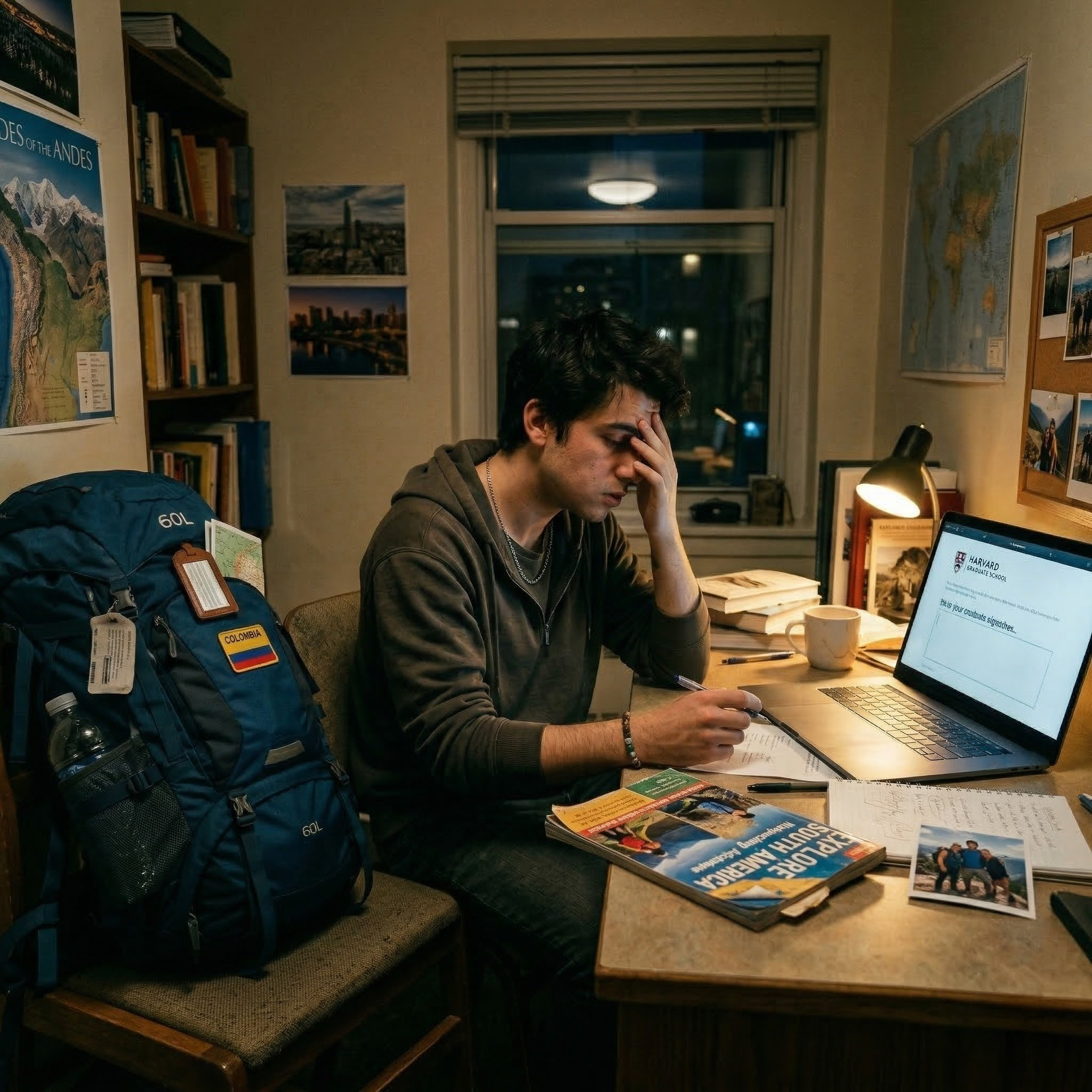
    Icarus stared at the blinking cursor on his laptop, the prestigious university’s fast-track application mocking him from the screen. Across the desk sat a dog-eared brochure for a backpacking trip through South America. Two different lives. Two very different altitudes.

    The expectations came from every side, mentors, professors, and the relentless culture of high achievement he had grown up in. They had all seemingly mapped out his flight path.

    “You’ve got the brilliance, Icarus,” his academic advisors would say, clapping heavy hands on his shoulder. “You just need to strap on the wings you’ve been given. You’re destined to reach the sun. You’ll be running an empire by thirty, mark our words.”

    But Icarus didn’t want the sun. The sun sounded exhausting. It sounded like seventy-hour work weeks, constant burnout, and a melting point he was terrified of hitting. He just wanted to see the earth. He wanted to wander through foreign streets, learn new languages, and feel the dirt beneath his boots, not soar miles above it in a corporate glass tower.

    The weight of it all was suffocating. Every time he opened his phone, his peers seemed to have their coordinates perfectly locked in. They were securing elite internships, launching startups, and navigating early adulthood with absolute, terrifying certainty. Meanwhile, Icarus felt like he was standing on the edge of a cliff, completely paralyzed. He didn’t know how to fly. He didn’t even know how to begin traveling. How was he supposed to make a decision that would dictate the rest of his life?

    The next afternoon, nursing a cold coffee and a deep sense of dread, he found himself sitting in the cluttered office of his favorite history teacher, Mr. Talos.

    “I’m grounded, Mr. Talos,” Icarus admitted, rubbing his eyes. “Everyone expects me to aim for the stratosphere. I just want to buy a backpack. But I don’t know how to do either. Everyone else has it all figured out, and I’m just… stuck.”

    Mr. Talos leaned back, his leather chair squeaking in the quiet room. He took off his glasses and looked at Icarus with a gentle, knowing smile.

    “Icarus, I’m going to let you in on the biggest, best-kept secret of adulthood,” Mr. Talos said softly. “Nobody knows what they are doing.

    Icarus blinked. “What?”

    “Nobody,” Talos repeated. “Not the kids on your social media feeds. Not me. Not the titans of industry everyone expects you to emulate.”

    “But they built empires. They practically built their own wings.”

    “And I promise you, half the time they were flying blind, praying the wax wouldn’t melt,” Talos chuckled. “We are all just making it up as we go along. The people who look like they have it figured out are just better at hiding the turbulence. You don’t need a master flight plan today. You just need to do what you can right now. You will make mistakes. You will take wrong turns. Sometimes you fail and crash, and that’s okay. You will figure it out as you go.

    Icarus let out a long breath he felt he’d been holding for months.

    It’s going to be alright,” Mr. Talos promised.

    Walking home that evening, the sky was painted in brilliant hues of orange and gold. Icarus looked up at the setting sun, no longer feeling the crushing pressure of its heat. He didn’t have to conquer it. For the first time in a long time, he felt he could just enjoy the light.

    [Read from the beginning: Chapter 1: The Wax and the Wire]
  • Chapter 10: Ashes of the Greater Good

    Chapter 10: Ashes of the Greater Good

    For Those who Burn the World to Build a Throne of Ash

    Read on Substack

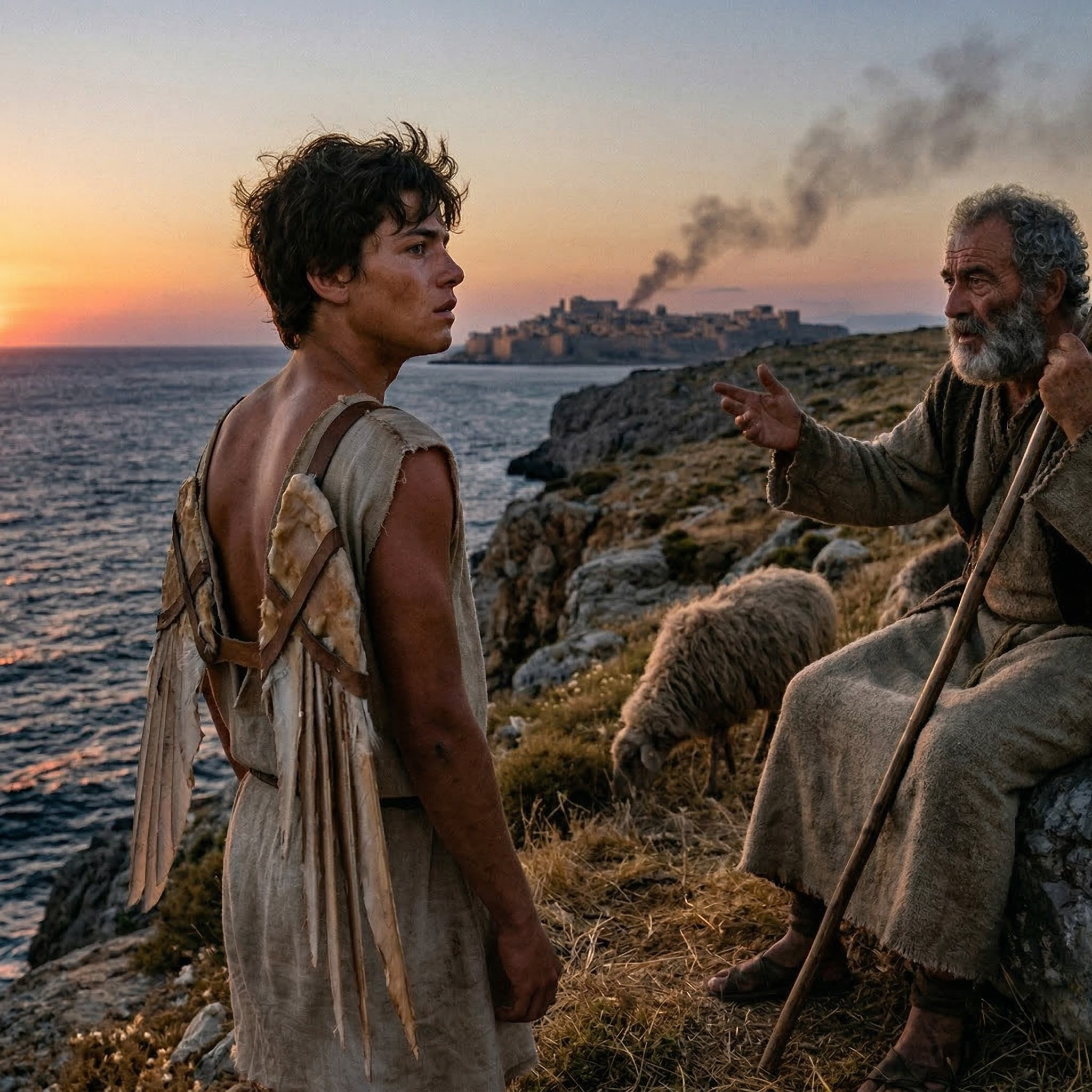
    The sun sat low, casting long, skeletal shadows across the rocky crags of Crete. Icarus, still flush with the youthful adrenaline of his father’s latest inventions, looked out toward the distant city-state of Minos. News had traveled fast on the wind: a rising leader, a man named Cleon, had seized control by betraying his own council, claiming that a unified city was worth a few broken oaths.

    “They call him a pragmatist,” Icarus said, kicking a loose stone over the cliffside. “My father says Cleon sees the world as a map, and he is simply drawing the shortest line to peace. If a few innocent men must be silenced to prevent a civil war, isn’t the silence a gift?”

    The shepherd didn’t look at the horizon. He was busy rubbing a thick salve into the leg of a ewe that had been caught in a thicket. He didn’t speak until the animal was comfortable.

    “Your father is a builder of things, Icarus. He understands wood, wax, and gravity,” the shepherd said, wiping his hands on a rough burlap cloth. “But he does not always understand the rot that starts in the soul. This Cleon you admire… he is a man who has decided that the destination is holy and the path is irrelevant. There is no man more dangerous in all of Greece.

    Icarus frowned, leaning against a gnarled olive tree. “Dangerous? He ended the food riots. He stabilized the currency. Surely the ‘end’, a prosperous city, is what matters most?”

    “Listen to me, boy,” the shepherd said, his voice dropping to a gravelly skin-prickle. “When a man decides the end justifies the means, he stops being a person and becomes a storm. To him, you are not a friend, a son, or a soul. You are a tool or an obstacle. If you are a tool, he will use you until you break. If you are an obstacle, he will crush you without a second thought, all while whispering that he does it for ‘the greater good.’

    He stepped closer to Icarus, his eyes hard as flint.

    “Avoid these people. Do not break bread with them. Do not let their logic infect your heart. They believe they are soaring above the petty ‘limitations’ of morality, much like the wings your father builds. They think they are closer to the sun because they have shed the ‘weight’ of their conscience.”

    The shepherd pointed toward the smudge of smoke on the horizon where Cleon’s “order” was being enforced.

    “The danger is not just what they do, but what they make you do.” the shepherd continued. “They will ask you to hold the torch while they burn the house, promising you a room in the palace they plan to build. By the time the palace is finished, you’ll find you’ve lost the ability to live in a house that isn’t made of ash.”

    “He thinks he is saving us,” Icarus whispered, looking at the distant fires.

    “He thinks he is the sun,” the shepherd corrected. “And anyone who thinks they are the sun will eventually scorch everyone who dares to stand in their light. Stay in the valley, Icarus. The air is cooler here, and the paths, though long and winding, are paved with the truth of each step, not the ghosts of those we stepped upon.”

    [Read from the beginning: Chapter 1: The Wax and the Wire]
  • Chapter 9: The Last Mirror

    Chapter 9: The Last Mirror

    Falling is easy; failing yourself is the true descent

    Read on Substack

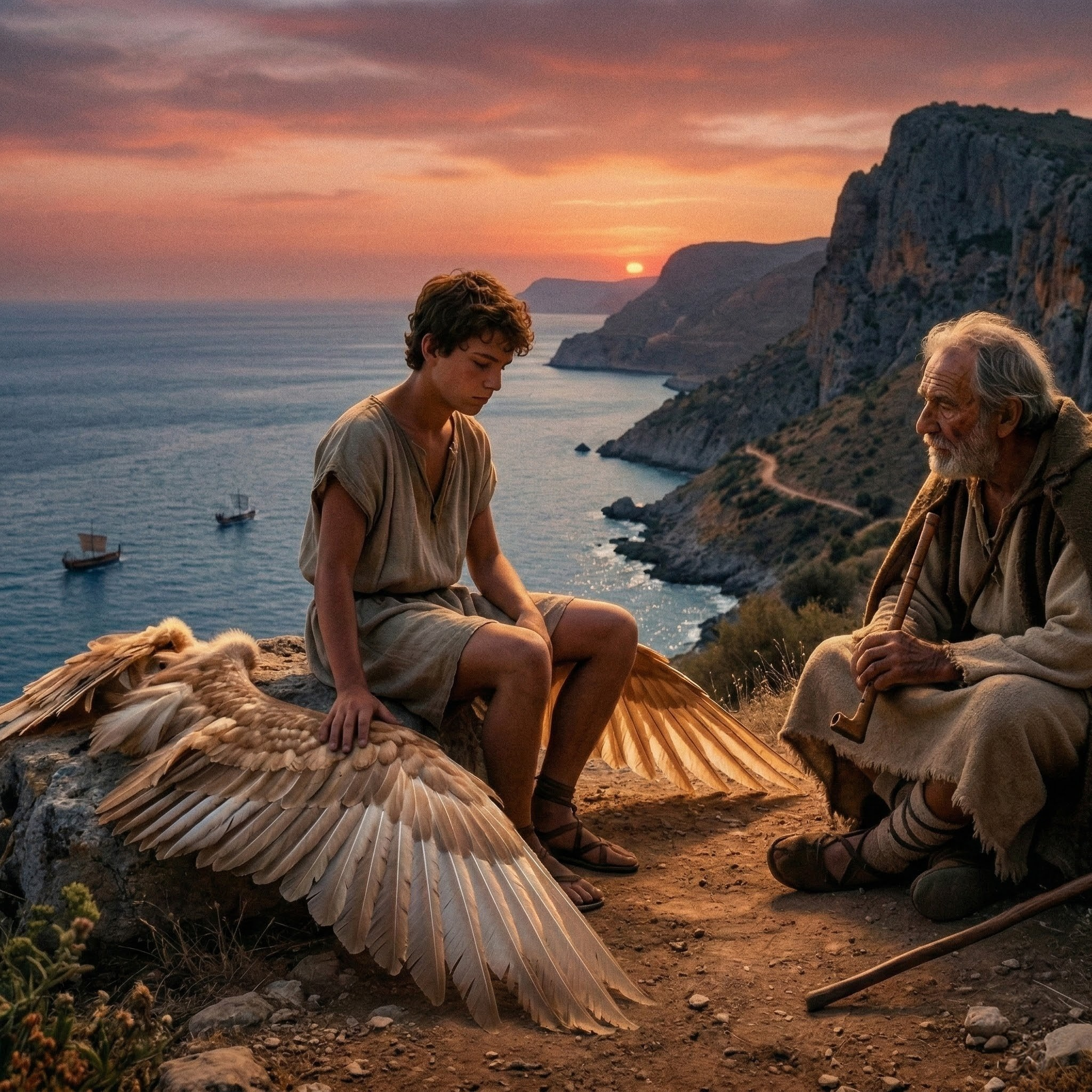
    The sun was beginning its slow descent toward the Aegean, casting long, amber shadows across the cliffs of Crete. Icarus sat on the edge of the precipice, his fingers absently tracing the wax seals on the magnificent wings his father, Daedalus, had fashioned.

    Nearby, an old shepherd sat among his flock, the same silent fixture Icarus had seen every day of his confinement. Usually, the shepherd was occupied with his pipe, but today, the instrument lay silent in his lap. For the first time, their eyes met, and the silence broke.

    “My father says these wings are my salvation,” Icarus said, his voice tight with the restless energy of youth. “He says they are the ultimate triumph of man over nature.”

    The shepherd looked at the intricate feathers, then back at the boy. “Your father is a builder of labyrinths and wonders. But he forgets that the heaviest cages are the ones we build for our own expectations.”

    The old man leaned back against a jagged stone. “There was a man once, not a lord or a hero, but a thief named Aitheron. Perhaps you’ve heard the name whispered in the markets. When he was your age, bursting with the same fire I see in you, he made a pact with his own soul. He asked himself: ‘Can I rob a thousand caravans by my own hand?’”

    Icarus paused, his hand hovering over a golden feather. “A thousand? That’s an impossible feat for one man.”

    “With that one question,” the shepherd continued, “he took his life in his hands. He didn’t sleep; he didn’t love. He hunted. And by the time the gray crept into his beard, he had done it. He had robbed a thousand caravans.”

    The shepherd’s gaze turned toward the sun. “But when he grew old, the weight of the gold felt like lead. He sought repentance. He told himself, ‘Aitheron, you have conquered a thousand enemies. Now, can you do the simplest thing? Can you escort just one caravan to its destination, safely and alone?’”

    “And did he?” Icarus asked.

    The shepherd’s face fell into a mask of deep, hollow sorrow. “He couldn’t. The habit of the hunt was too deep, or perhaps his spirit had simply withered under the sun of his own ego. He failed. He didn’t just lose the caravan; he lost the vision of who he thought he had become.”

    The old man looked directly at Icarus, his eyes reflecting the flickering light of the wax.

    He disappointed himself,” the shepherd whispered. “The King could have thrown him in a dungeon, or the gods could have struck him blind, but he found those to be mercy. Tell me, boy; is there any punishment more grave than looking into a mirror and seeing someone you no longer respect?

    Icarus looked down at the wings. They felt suddenly heavier, not like a gift of flight, but like a test he was already failing.

    [Read from the beginning: Chapter 1: The Wax and the Wire]
  • Chapter 8: Don’t Burn the House

    Chapter 8: Don’t Burn the House

    In a world of ‘delete,’ he chose to ‘save.’

    Read on Substack

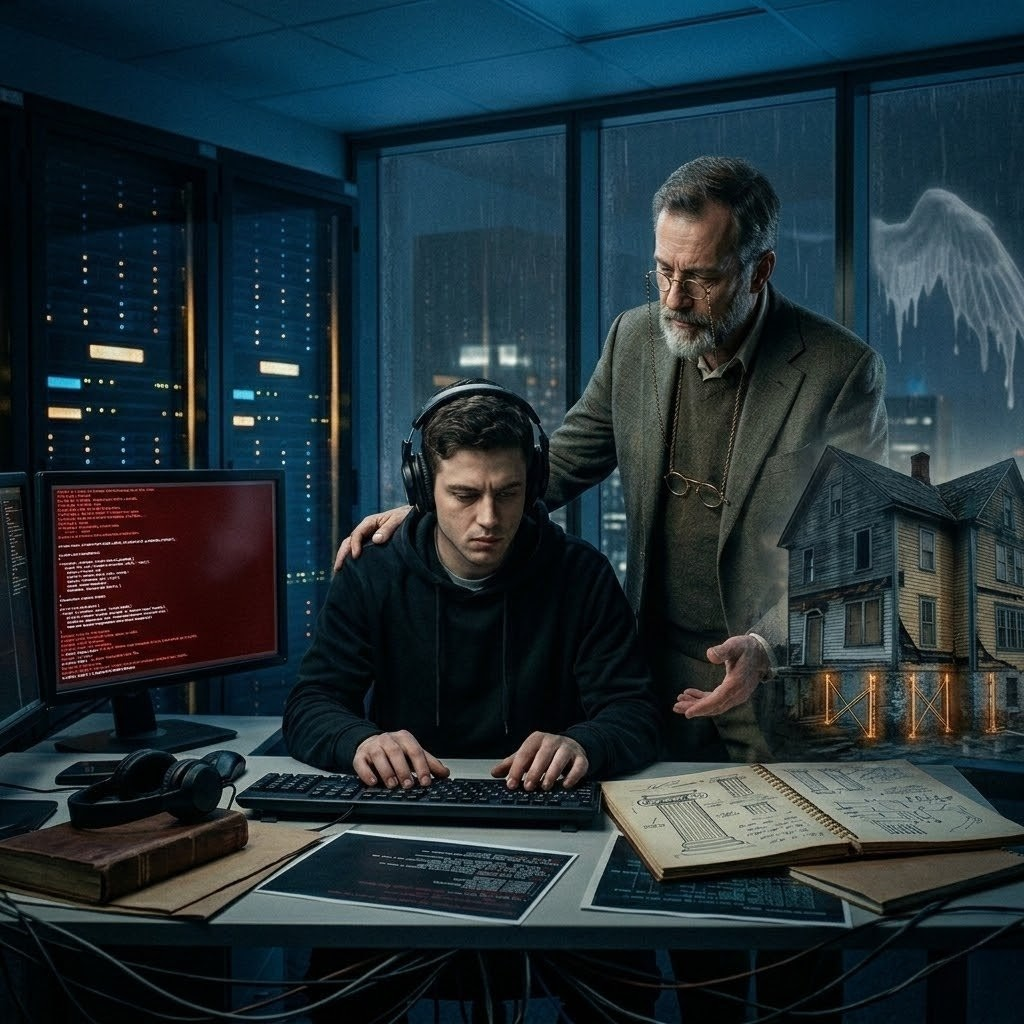
    The fluorescent lights of the server room hummed at a frequency that matched the dull throb in Icarus’s temples. At twenty-six, he was the lead architect on Solaris, a high-stakes cloud migration project. For months, he had been building wings of code, aiming for a seamless, lofty integration that would redefine the company’s infrastructure.

    But today, the migration failed. Again.

    Icarus stared at the terminal. Red error logs cascaded down the screen like blood. He had tweaked the API, refactored the legacy modules, and patched the security holes, but the foundation was trembling.

    “Maybe I should just scrap the whole repository,” Icarus muttered, his hands hovering over the delete command. “It’s bloated. It’s messy. I could start fresh with a new framework, a new team, a new vision.”

    He thought of his girlfriend, Maya. Lately, their relationship felt like this code, full of legacy issues and miscommunications. It was tempting to think that “new” was synonymous with “better.” To just leave the bugs behind and find a “cleaner” build with someone else.

    “The sun is getting a bit hot, isn’t it?”

    Icarus jumped. Daedalus, the Senior Systems Fellow and his mentor, stood in the doorway, holding two lukewarm coffees. He looked at the mess of code on the screen with the calm eyes of a man who had seen a thousand crashes.

    “It’s a disaster,” Icarus sighed. “I think I need to knock it all down and start from scratch. It’s easier than fixing this rot.”

    Daedalus pulled up a chair. “Tell me, Icarus. If you have a house and a pipe bursts, do you burn the house down and buy a new plot of land?”

    “No, but…”

    “You’re young,” Daedalus interrupted gently. “You have that itch to fly toward the next shiny thing because it’s unblemished. But listen to me: Repair the house you have. Don’t destroy your history just because the present is difficult.”

    He pointed to a specific block of messy, five-year-old code. “You call this ‘rot.’ I call it ‘experience.’ This project isn’t new and shiny, because life happened to it. It’s survived outages, pivots, and growth. If you scrap it, you lose everything you learned while building it. You’ll just meet the same problems in the next project, under a different name.”

    Icarus looked at the screen, then at his phone, where a missed text from Maya sat unanswered.

    “Whether it’s this architecture or your life outside these walls,” Daedalus continued, “don’t knock down the old house just because it’s old. It’s not shiny, because it has character. It’s weathered, because you grew there. You don’t need a new start; you need to go back in bigger, better, and wiser, using the very stones you’ve already laid.”

    Icarus took a breath. The urge to flee, to fly away from the friction, began to cool. He didn’t delete the repository. Instead, he opened the documentation for the oldest part of the system. He began to bridge the gap between what was and what could be.

    He realized that the “perfect” relationship or the “perfect” project didn’t exist in a fresh start; it was forged in the persistent, messy work of staying.

    [Read from the beginning: Chapter 1: The Wax and the Wire]
  • Chapter 7: Symmetry from the Peak

    Chapter 7: Symmetry from the Peak

    Finding the Pattern in the Plummet

    Read on Substack

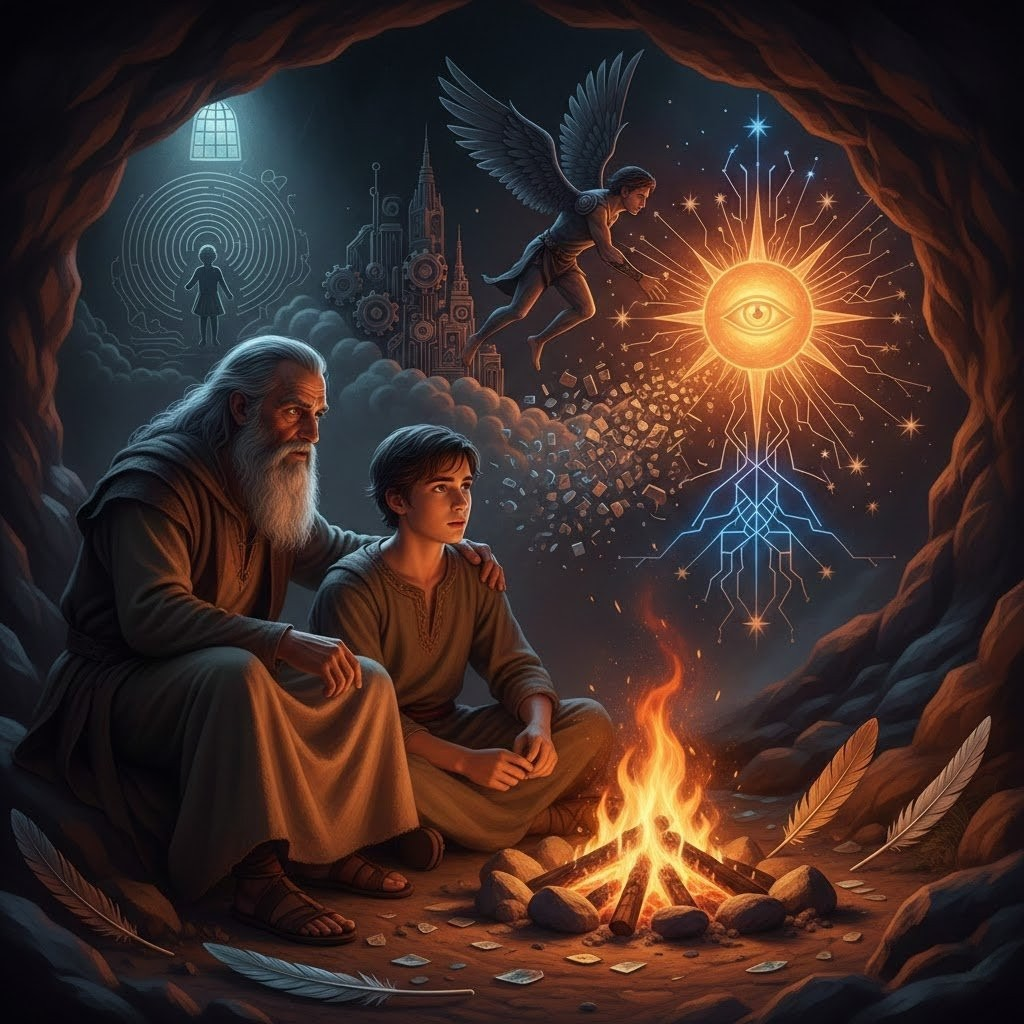
    “Sit closer,” the old man urged, the firelight dancing in his eyes. “People call the tale of Icarus a tragedy of falling. They forget that before the fall, there was the forging.”

    “Did he start with wings?” the youth asked.

    “No. He started in a Labyrinth. In the eighth grade, he was labeled ‘gifted,’ but he felt lost. When asked what he wanted to create, he didn’t ask for an exit. He looked at the skylight and said, ‘I want to build a mind that can solve any riddle.’”

    The old man smiled. “The teacher feared the heat and told him to start smaller. So, the boy tucked his ambition away like a single feather. By the tenth grade, the wax began to melt in his heart. He crafted wings out of logic, a program that translated ancient handwriting into the pulse of a machine. He was catching thermals, soaring into university while others were still learning to walk.”

    “Then he reached the Sun?”

    “Not yet. At eighteen, he needed bread. He became the lowest bird in a corporate flock, spending six years navigating the gray mists of industry until he was a leader who turned ‘impossible’ into ‘done.’ Then, he did something strange. He dived.”

    “He fell?”

    “To the world, yes. He left the high clouds to study ‘finches’, the small, psychological decisions of the soul. It looked like a descent into the dirt. He built something bold, only for the powers above to crush it. Yet, in the wreckage, he found the final piece: a blind Machine that needed an Eye.”

    The old man leaned forward. “He combined the handwriting models, the corporate iron, and the logic of the finches to give that Machine sight. He finally touched the Sun he’d promised as a child.”

    “Was he afraid of the height?”

    “He realized there was no height to fear,” the old man replied. “Looking back, his path looked like a jagged, broken line of falls and flutters. But from the peak, he saw the symmetry. You can never see the constellation while standing on a single star.

    He placed a hand on the youth’s shoulder. “Do not fear the heat when the world tells you to seek the shade. Most people build cages out of ‘common sense,’ but the dreamer knows logic is often a map drawn in the dark. Trust the obsession others call a distraction. Every stray feather you gather is a debt paid to your future self. Icarus wasn’t falling all those years, my boy. He was waiting for the wind to catch up to his heart.”

    [Read from the beginning: Chapter 1: The Wax and the Wire]

  • Chapter 6: Medals in the Morning

    Chapter 6: Medals in the Morning

    The Weight of Applause and the Gravity of the Crowd

    Read on Substack

    Icarus first tasted the sun in the seventh grade. It wasn’t a literal flight, but a programming competition, a gauntlet of logic meant for high school seniors that he, a quiet twelve-year-old, had dismantled with ease. The victory stunned the faculty, but for Icarus, the prize wasn’t the plastic trophy. It was the noise. The sudden, intoxicating roar of validation from people who hadn’t known his name an hour prior.

    That afternoon, he learned a dangerous lesson: if you perform well enough, strangers will love you. He had been chasing that high ever since, flying on the updrafts of applause long before his wings, his character, wisdom, and maturity, were fully formed.

    Years later, on the eve of his magnum opus software launch, Icarus stood bathed in the blue light of a server room. He was manic, scrolling through a waterfall of praise on his second monitor.

    “Sir, look!” Icarus called out as his mentor entered. The Teacher, a bearded man with the patience of an ancient shepherd, paused by the door. “The beta reviews are in. They’re calling me a visionary. ‘The Architect of the New Age,’ says this one. Can you feel the energy?”

    The Teacher glanced at the scrolling text, unimpressed. “I hear noise, Icarus. It reminds me of the sound a playground makes when a fight breaks out, or when a celebrity walks by. It is loud, yes. But it is just noise.”

    “It’s not just noise, it’s loyalty,” Icarus insisted, his eyes bright with dangerous pride. “They see what I’ve built. I feel like I’m finally where I belong. Up here, above the doubt. Their cheers are lifting me up; I don’t even need to finish the safety protocols. I can float on this feeling alone.”

    “And that is exactly why you will fall,” the Teacher said softly, pulling a chair close. “Sit, boy. Listen to someone who has seen many ‘golden children’ ascend.”

    Icarus scoffed, though he sat. “You think I’m arrogant.”

    “I think you are young,” the Teacher countered. “You are building your wings out of their breath. But the mob is a weather pattern, violent and shifting. Today, you are the hero who defied the odds. But listen closely: These people typing your name in all caps? They are the same people who will give a man a medal of honor in the morning, weeping with pride, and then use the ribbons from those very medals to hang him before the sun sets.

    Icarus shook his head, turning back to the glowing comments. “That’s morbid. And untrue. They love the work.”

    “They love the rise,” the Teacher corrected sternly. “It excites them. But if you fly too high and the code breaks, or you say the wrong thing, the sound you make hitting the ground will excite them just as much. If you fly to please the ants, you will eventually burn.”

    Icarus turned back to the screen, the blue light reflecting in his glasses, drowning out the warning. “You’re wrong. They’re with me.”

    The Teacher stood up, his shoulders heavy with inevitable grief. “They are with you while it is morning, Icarus. But it is already afternoon. And the wind always changes in the evening.

    [Read from the beginning: Chapter 1: The Wax and the Wire]
  • Chapter 5: The Wax That Holds the Wings

    Chapter 5: The Wax That Holds the Wings

    The Invisible Strength of Small Connections

    Read on Substack

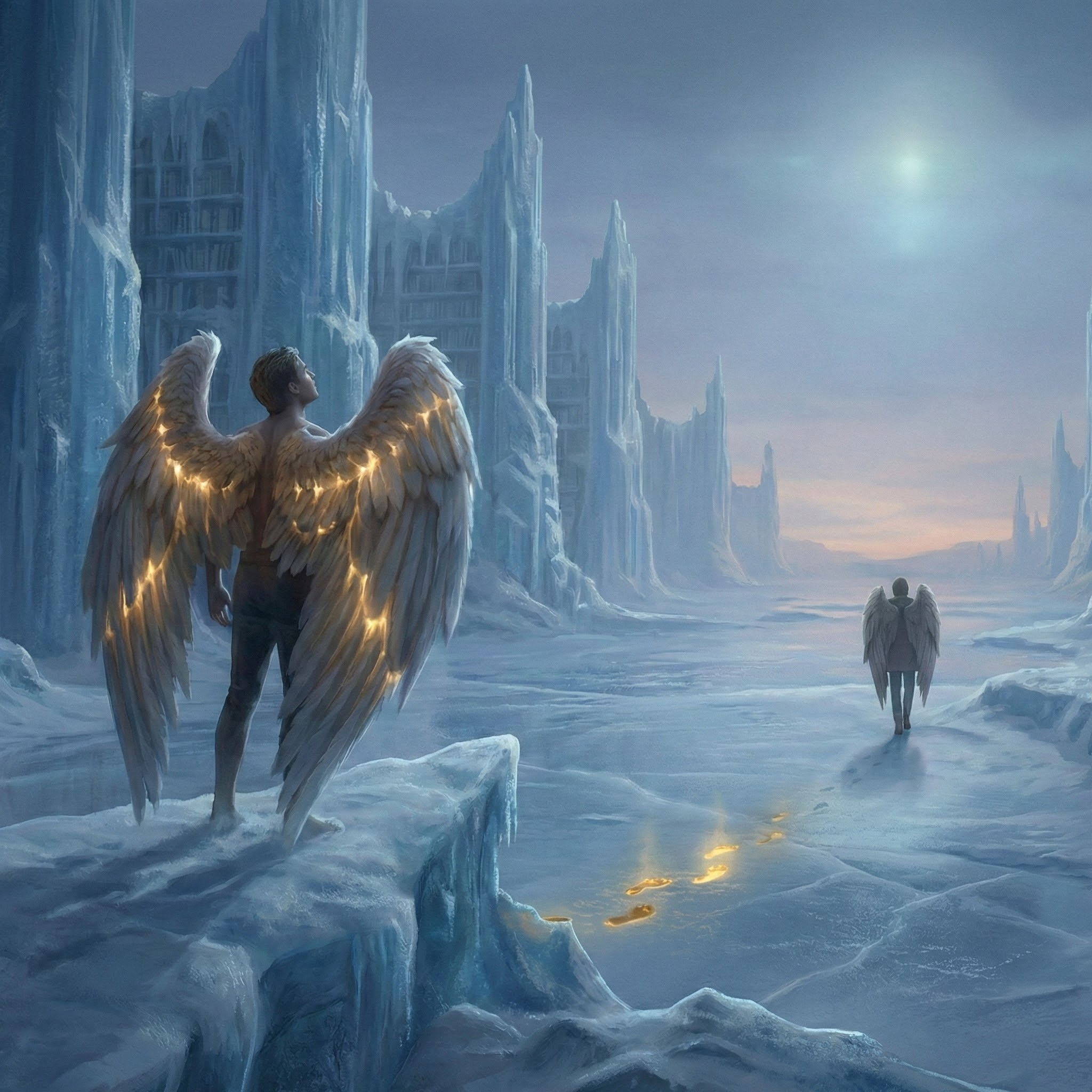
    Was it an age ago, or merely yesterday? Icarus was soaring, crafting his wings in the Kingdom of Eternal Frost. He was ascending toward his own personal sun, a Doctorate, blinded by the brilliant light of ambition and the thin, high air of academia.

    Into this cold, high place came a traveler from the Valley of Vineyards. The traveler was a fledgling, bright-eyed and eager to test his own wings against the northern winds. He arrived carrying nothing but hope and the heavy silence of a stranger in a strange land.

    For a time, they flew in formation. They bridged the gap between their tongues, Icarus’s clipped northern speech and the traveler’s melodic southern rhythms, finding a common language in shared smiles. But as Icarus flew higher, entranced by the sun of his research, the air grew thinner. He looked only upward, obsessively adding feathers to his own wings, forgetting to look beside him.

    He forgot that flight is lonely work.

    The traveler began to drift. Without an updraft to catch him, without a flock to call to, his energy waned. The cold of the land seeped into his bones.

    Then came the day the traveler folded his wings. He approached Icarus in the great hall of learning and spoke quietly. He was returning to the Valley of Vineyards; he was abandoning the flight.

    Icarus was jolted from his ascent. “Why?” he asked, looking at the traveler’s strong wings, so capable of flight. “You have such altitude already. You have such promise.”

    The traveler didn’t speak of the cold, but Icarus finally saw the frost in his eyes. It wasn’t the difficulty of the flight that had grounded him; it was the silence of the sky.

    A terrible realization crashed into Icarus. He had believed that what sustained a person were the great feathers,the grand achievements, the papers, the titles. But looking at his friend’s defeat, he realized he was wrong. It is the wax that matters.

    It is the wax, those small, sticky, seemingly insignificant moments of connection, that holds the wings together. A shared coffee, a question about one’s day, a moment of listening; these are the things that prevent the sun from melting us, and the sea from swallowing us.

    The traveler returned to the warmth of his home, but he left Icarus with a heavy truth anchored in his heart. We are all fragile aviators. We think we need grand gestures to save one another, but often, all a person needs to keep flying is to know they are not the only dot in the vast, empty sky.

    People matter. The wax matters. Without it, even the strongest wings will fall.

    [Read from the beginning: Chapter 1: The Wax and the Wire]
  • Chapter 4: The Wax and The Root

    Chapter 4: The Wax and The Root

    Where the Height of Ambition Meets the Depth of the Soul

    Read on Substack

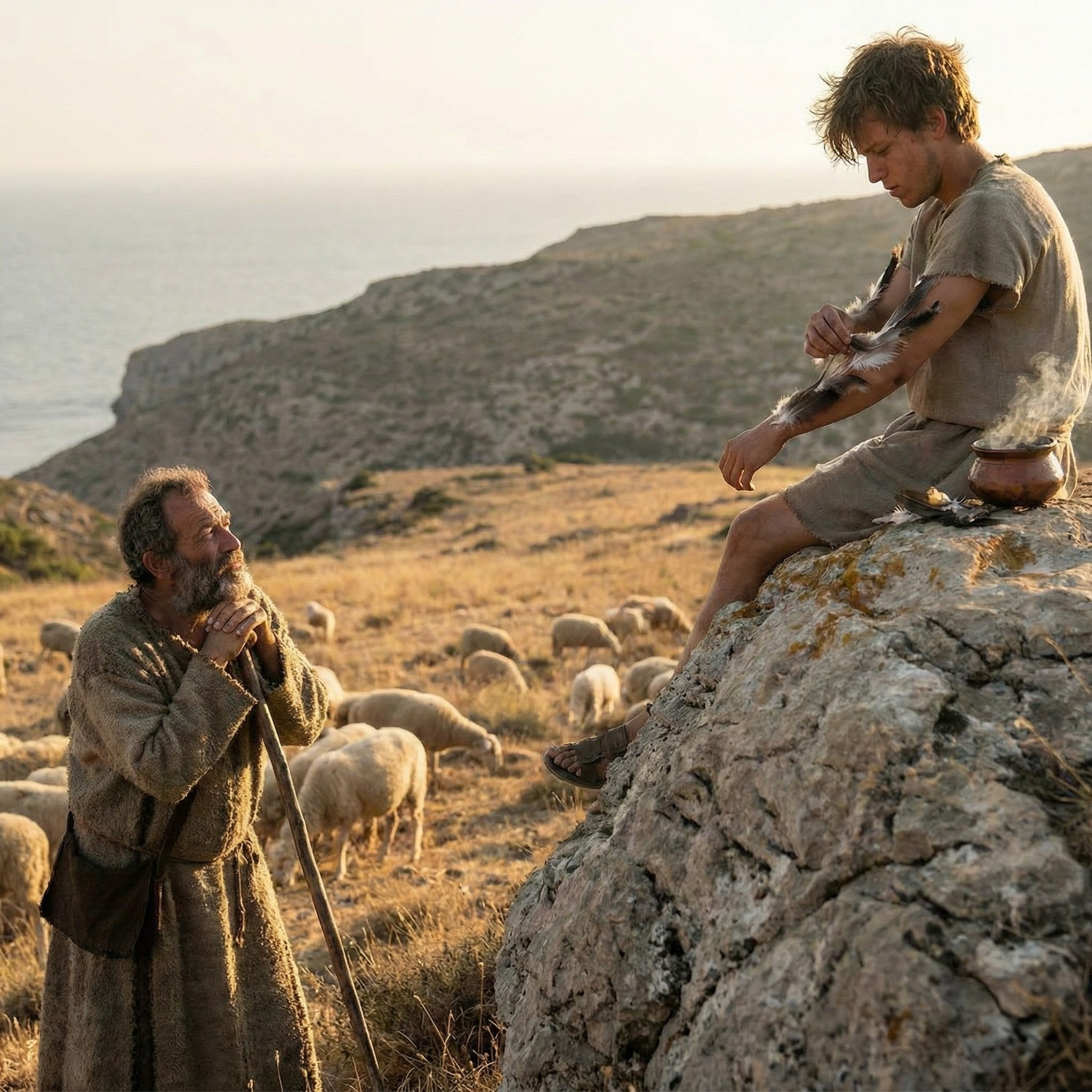
    Icarus stood on the precipice and dipped his feathers in the pot of melting wax. He looked down at the old man tending the flock below.

    “Old man,” Icarus said. “You think men are fixed like your mountains but I tell you they are wax. Every soul has a price. It is not always gold. Sometimes it is love or the heat of the sun. Offer a man the thing he craves most and he becomes clay. Raise the price high enough and the gentlest poet will turn butcher. For the right height anyone will let go of the earth.”

    The Shepherd leaned on his crook and shook his head.

    “You mistake desire for capacity,” the Shepherd replied. “You see the sky but I see the shoreline. The ocean rages but it cannot swallow the rock. In my mind every soul has a limit. It is a final shore that cannot be bribed. Pour the whole sea into a cup and the cup does not grow. It merely overflows. The cup cannot hold more than its shape allows.”

    The Shepherd gestured to the wild grass.

    “There are men whose limit stops at a whisper,” he said. “They might refuse to tell a lie no matter the kingdom you offer them. Their tongue is a locked gate. Yet that same man might find murder to be as light as a feather. Killing sits within his boundary but lying sits outside it.”

    Icarus paused with a feather in his hand.

    “Your scales are broken,” Icarus said. “Surely blood weighs more than breath. To steal the light from a man’s eyes is the ultimate theft. A lie is but a momentary fog. If a man can stomach the feast of murder surely he can swallow a crumb of deceit. Is not the greater sin the harder limit to cross?”

    “You measure sin by its weight but I measure it by its nature,” the Shepherd said. “You think the soul is a ladder where murder sits at the top. But the soul is a garden. To the man we speak of violence is an honest trade. When he strikes with the sword he does so in the open sun. The act is terrible but it is true. But a lie? To him a lie is a rot that starts from the inside. He cannot bear the lie because it warps reality itself.”

    The Shepherd looked up at the boy on the ledge.

    “He would rather be a truthful butcher than a deceitful saint. So he kills you to your face and sleeps soundly. Yet he would break before he spoke a falsehood. For in his strange limit murder is only a crime against life but a lie is a crime against himself.”

    [Read from the beginning: Chapter 1: The Wax and the Wire]

  • Chapter 3: The Flight of the Paper Balloon

    Chapter 3: The Flight of the Paper Balloon

    Protecting the Golden Spark Against the Weight of the World

    Read on Substack

    The book was a gift from a kindred spirit, My Sweet Orange Tree by José Mauro de Vasconcelos. As Icarus turned the pages, he found more than words; he found a mirror. When he reached the passage titled “The First Paper Balloon,” the reflection shattered him. He wept for Zezé, but mostly, he wept for the recognition of a shared wound. It was the ache of a child who pours his soul into a fragile creation, only to have it grounded by the weight of an unfair world. Icarus knew that gravity well. He had felt his own wings clipped long before he ever learned to fly.

    Zezé: “You see, Gloria? I hadn’t done anything wrong. When I deserve it, it doesn’t matter to me whether they beat me or not. But this time, I hadn’t done anything bad.”

    Gloria sighed.

    Zezé: “The saddest part of all is my balloon. It would have been so beautiful. Ask Luis.”

    Gloria: “I’m sure it would have been a very beautiful balloon. But don’t worry. Tomorrow we’ll go to Dindinha’s house and buy some silk paper. I’ll help you make the most beautiful balloons in the world. So beautiful that the stars will be jealous of them.”

    Zezé: “Gloria, it doesn’t matter anymore. The first balloon a person makes is always the most beautiful. If you don’t succeed at that one, you never will, or you just won’t have the heart to try again.”

    Zezé’s balloon was Icarus’s wings, a dream made of silk and hope, meant to touch the sun but destined to be torn down by those who feared the heights. To the world, it was just paper; to the boy, it was his entire capacity to believe. For twenty years, Icarus wandered through the shadows of that disappointment, struggling to forgive a life that seemed designed to break the brave.

    Yet, deep within the man, the boy remained. He was the golden spark of curiosity, the defiant laughter that refused to be silenced, and the stubborn “No” to a world of grey expectations. Society is a labyrinth built of “shoulds” and “musts,” a maze designed to convince the dreamer that his wings are a delusion and his spirit must be tamed.

    That day, looking at the wreckage of Zezé’s first balloon, Icarus made a sacred pact with his younger self. He realized that while the sun might melt the wax, only silence could kill the spirit.

    Never,” he whispered to the child within, “shall I let you down.

    He chose then to be the guardian of his own light. He would be the one to provide the silk and the warmth, to believe in the flight when the sky looked empty. He would protect that boy’s right to dream of the stars, ensuring that even if the first balloon was lost, the heart would always find the courage to build another.

    [Read from the beginning: Chapter 1: The Wax and the Wire]
  • Chapter 2: The Gravity of Grace

    Chapter 2: The Gravity of Grace

    Falling from the Sun to Find the Earth

    Read on Substack

    “Move closer, little ones. Yes, even you, Leo, tuck those restless feet under the blanket. I have a story to tell you, and it’s not the one your teachers tell. They like to speak of Icarus as a warning, don’t they? A clumsy boy who failed to stay in the sky. But they have it wrong.”

    Elena whispered, “Didn’t he fall because he wasn’t good enough?”

    The old man’s eyes caught the amber light. “The world was cruel to him not because he fell, Elena, but because of how brightly he started. As a teenager, Icarus was the ‘golden boy.’ His mind was a flash of silver; he understood the stars before he could even reach for them. Teachers whispered his name like a promise, seeing him as a rocket destined to outshine the sun.”

    He sighed, the weight of memory heavy in the room. “Then came his twenties, and the sprint became a crawl. The master of the sky found himself trapped in a labyrinth of a degree that wouldn’t end. One year stretched into six. While his peers built towers and wore crowns, Icarus sat in silence, staring at math he couldn’t solve, lost in the woods of his own ‘failure.’”

    “Did people talk?” Leo asked.

    “Louder than the wind,” the man replied. “They called him a tragedy of lost velocity. They judged him for walking when he should have been flying. Even Icarus, looking at his wax-stained hands, felt the burning shame of wasted potential. He thought he had lost his way.”

    The old man leaned forward, a knowing smile playing on his lips. “But the world didn’t see what lay at the water’s edge. If his wings had been as sturdy as expected, he would have remained a prisoner of the sky. He would have chased a sun that offers light but no warmth, soaring high and oblivious to the treasures hidden in the shadows of the earth.”

    “The girl?” Leo guessed.

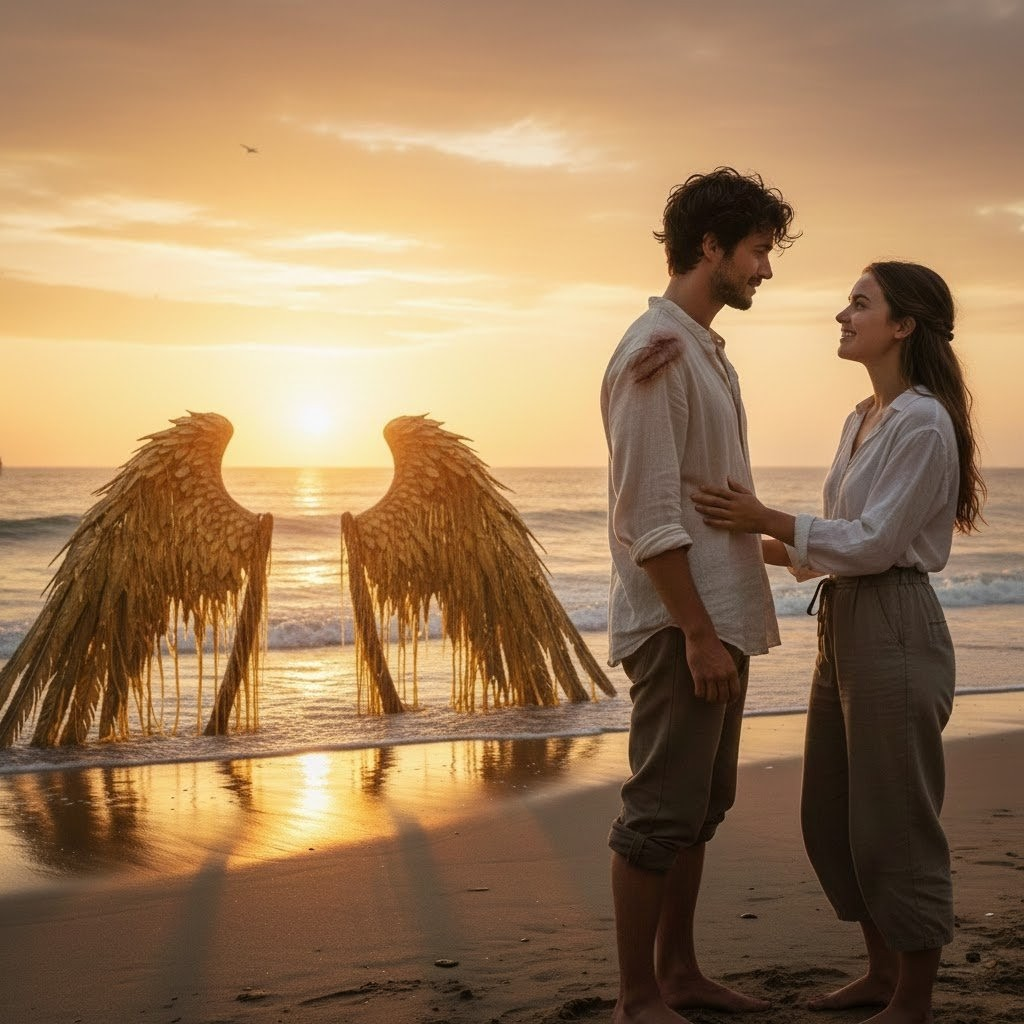
    “Exactly. If he had been perfect, if he had won every race and graduated with the sun still in his eyes, his path would have remained a straight, lonely line. He would have flown right over the very shore where his soul was waiting. The melting of his wings wasn’t a failure of talent; it was a deliberate gravity. Every mistake, every extra year of struggle, was a stitch undone. It was stripping him of false heights until he was finally heavy enough to land.”

    He looked at the dark window. “When he washed ashore in his mid-twenties, he wasn’t looking for a trophy. He was looking into the eyes of his perfect companion. While the other ‘gifted’ children were burning themselves out against the sun, he was standing on solid ground with the only person who mattered. The six years of struggle weren’t a delay; they were a pilgrimage. He realized he hadn’t been falling behind; he had been arriving. He looked at his scarred shoulders and whispered, ‘I have received the reward for every plummet.’

    He patted Elena’s hand gently. “So, when you fail, and you will, do not weep for the feathers you lose. Celebrate the wings that fail you. For there is a specific kind of mercy in the fall that drops a person, broken and breathless, exactly where they were always meant to be. Sometimes, the earth feels much better than the sky.

    [Read from the beginning: Chapter 1: The Wax and the Wire]
  • Chapter 1: The Wax and the Wire

    Chapter 1: The Wax and the Wire

    High Altitudes on a Borrowed Signal

    Read on Substack

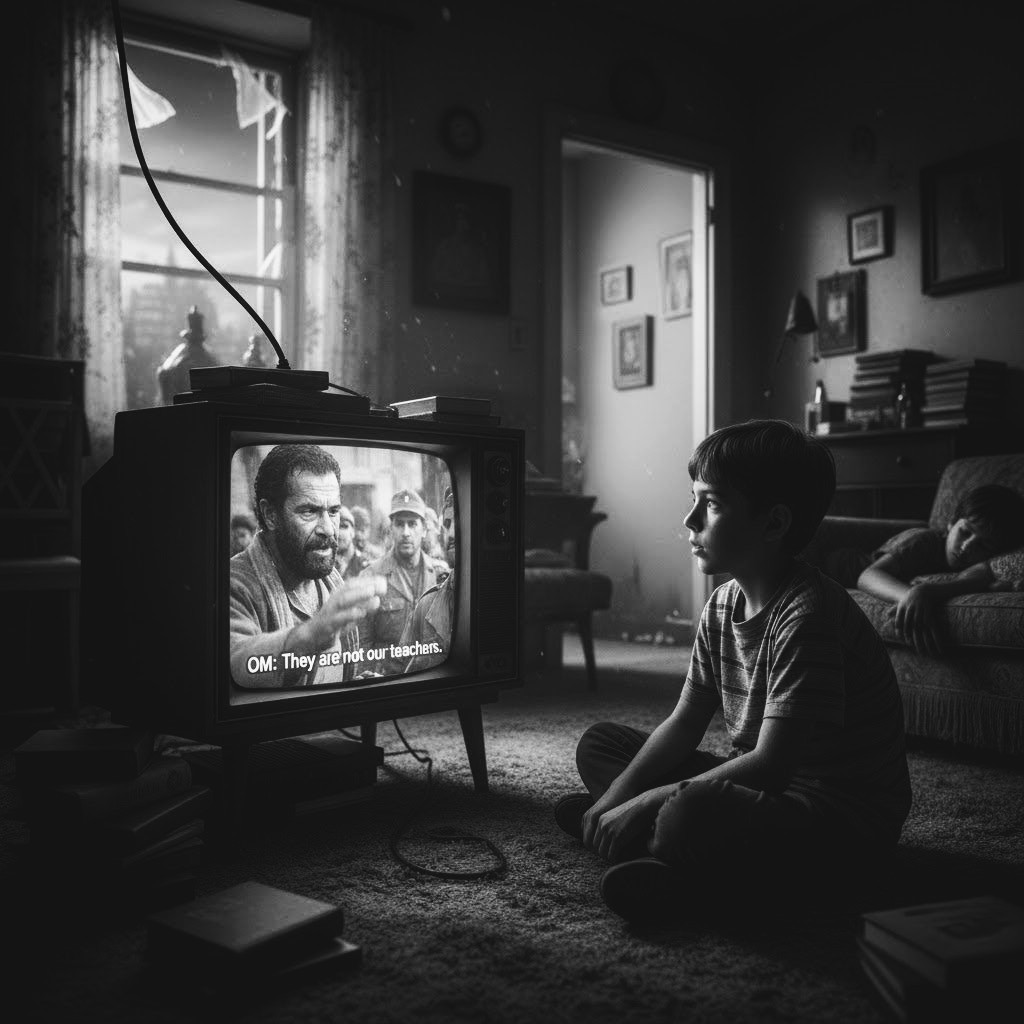
    In the mid-90s, Icarus was a boy of twelve, living in the gravity of the lower middle class, a term that, in a third-world city, meant you weren’t starving, but you were always one broken appliance away from a crisis. His family occupied the first floor, while their ambitions, and their entertainment, hung somewhere above them.

    Because they couldn’t afford a VCR, a single coaxial cable served as their umbilical cord to the world. It dangled from a neighbor’s window on the third floor, swaying in the wind, a thin black line connecting their aging TV to a machine they didn’t own. It was a fragile setup, a makeshift wing held together by luck and neighborhood grace.

    His third brother, Theopompus, was the one who brought the fuel for these flights, tapes from the university movie club. He was the one who provided the means to see beyond their cramped apartment. Today, they are separated by oceans and decades, two points on opposite sides of the globe, the bond between them having long since melted away.

    But one afternoon, the screen flickered to life with Lion of the Desert. As Icarus watched Anthony Quinn’s Omar Mukhtar lead his people against the Italian occupation, he encountered a truth that felt like heat against his face.

    The scene was a crucible: Libyan rebels had captured Italian soldiers. Seeking a blood-debt for their fallen kin, a soldier moved to execute the prisoners. Mukhtar stopped him with a command that carried the weight of a mountain.

    “They are not our teachers.”

    For the boy named Icarus, those words were the “sun.”

    In the myth, the sun is a destructive force that brings Icarus crashing down. But for this Icarus, the words provided a different kind of heat. They burned away the easy justifications of hate. He realized that to soar above one’s enemy, one must refuse to mimic them. If you use the enemy’s cruelty as your map, you aren’t flying toward freedom; you are just falling into a different kind of darkness.

    To stay aloft, he had to remain untainted by the shadow of those he fought. He learned that day that the highest flight isn’t about physical distance or wealth, it is the distance you maintain between your soul and the base instincts of revenge.

    The cable eventually came down, the TV eventually died, and the brothers went their separate ways. But that sun, the realization that we are defined by what we refuse to learn from our enemies, never stopped burning.